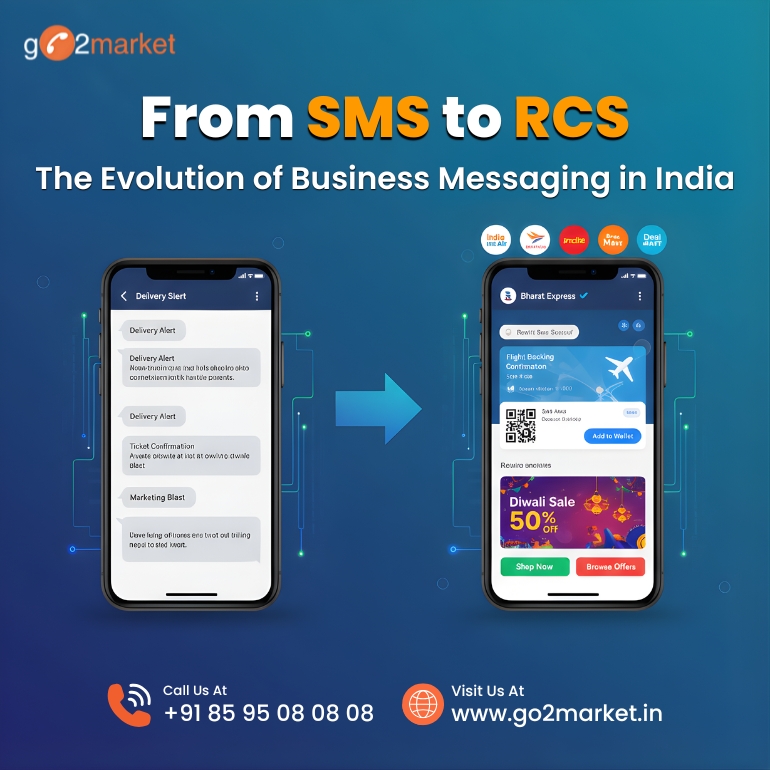
For more than two decades, SMS has been the backbone of business communication and other official communication in India. From OTPs to bank alerts, from government notifications to essential service updates, SMS has remained one of the most reliable and far-reaching channels. But as India undergoes rapid digital transformation, with rising smartphone penetration, cheaper data, and the growth of 4G and 5G, business messaging is evolving. Rich Communication Services (RCS), often described as “the next generation of SMS,” is emerging as a powerful tool for brands looking to deepen engagement.
Yet, despite the excitement around RCS, SMS continues to play a critical role, especially in India’s diverse user landscape. This is not a story of replacement; it’s a story of evolution, where both SMS and RCS coexist and complement each other to serve different audiences and communication needs. RCS is emerging as a popular tool for business as it offers advanced features and better analytics.
The Rise of RCS: Taking Business Messaging to the Next Level
If SMS is the foundation, RCS is the upgrade built for modern smartphone users. RCS operates within the native messaging app on Android devices, enabling rich, app-like experiences without requiring users to download any new app.
1. What Makes RCS Different?
RCS looks and feels like a modern messaging platform. Unlike SMS, it supports:
- ~ High-quality images and videos
- ~ Carousels and product catalogs
- ~ Quick reply buttons and CTAs
- ~ Maps, locations, and deep links
- ~ Verified business profiles
- ~ Analytics like read receipts and delivery status
It brings the best of WhatsApp, Instagram, and mobile apps directly into the messaging inbox, making communication more interactive and engaging.
2. Why RCS Matters for Indian Brands
With over 600 million smartphone users in India and rising adoption of Android devices, RCS is becoming increasingly relevant. Brands are using RCS for:
- ~ Product launches
- ~ Festive promotions
- ~ Lead generation
- ~ Customer onboarding
- ~ Order tracking
- ~ Feedback collection
- ~ Rich storytelling campaigns
Early adopters have reported 5x–12x higher engagement compared to SMS campaigns.
SMS vs. RCS: Not Competitors, but Complements
A common misconception is that RCS will ultimately replace SMS. But India’s demographic diversity, urban vs. rural, feature phone vs. smartphone, just reflects how both these channels are necessary.
SMS = Reach + Reliability
RCS = Rich Experience + High Engagement
Instead of choosing one, smart brands are adopting a hybrid messaging strategy:
1. Device-Based Targeting
- ~ RCS for smartphone users
- ~ SMS fallback for feature phone users
This ensures every user receives the message, regardless of their device.
2. Content-Based Optimization
- ~ Use SMS for urgent, time-sensitive updates like OTPs and alert messages
- ~ Use RCS for visually rich promotional content, onboarding journeys, or multi-step interactions
3. Cost-Performance Balance
SMS remains a low-cost channel for mass communication, while RCS enables higher ROI for targeted campaigns where engagement matters more.
Real-World Use Cases: How Brands Can Use SMS and RCS Together
1. E-commerce
- RCS: Product carousels, offers, COD confirmations, abandoned cart reminders
- SMS fallback: Delivery alerts, OTPs, payment confirmations
2. Banking & Financial Services
- RCS: Loan offers, credit card promotions, personalized investment updates
- SMS: OTPs, balance updates, fraud alerts
3. Healthcare
- RCS: Appointment booking flows, test report previews, health tips
- SMS: Appointment reminders, emergency alerts, and medicine pickup timings
4. Government & Public Sector
- RCS: Scheme awareness campaigns, citizen onboarding, digital services
- SMS: Alerts for rural citizens, essential notifications, disaster updates
5. Retail & FMCG
- RCS: Digital catalogs, festive offers, loyalty program updates
- SMS: Billing alerts, coupon codes, store visit reminders
This blended approach ensures maximum reach and maximum engagement at the same time.
The Future: AI-Powered Hybrid Messaging
As brands embrace next-generation communication, the future will be defined by AI-driven personalization across both SMS and RCS.
1. Personalized Messaging at Scale
AI can help brands tailor messages based on user history, device type, region, language preference, and behavioral patterns.
2. Smart Channel Selection
Tech platforms will automatically detect whether a user supports RCS and deliver the message accordingly, falling back to SMS when needed.
3. Message Automation
With AI bots, both SMS and RCS can host conversational flows:
- ~ Query resolution
- ~ Lead qualification
- ~ Appointment scheduling
- ~ Feedback collection
4. Analytics and Optimization
RCS provides richer insights, while SMS provides consistent delivery metrics. AI can analyze both to optimize campaign performance end-to-end.
Conclusion,
India isn’t moving from SMS to RCS messaging; it’s embracing a future where both coexist and support business communication. SMS ensures nationwide reach, especially in rural and low-network regions. RCS enables immersive, interactive, high-engagement experiences for smartphone users.
For brands, the real opportunity lies in adopting a hybrid, intelligent messaging strategy that uses the right channel for the right user at the right time.
In a country as diverse and digitally dynamic as India, the evolution from SMS to RCS isn’t just about upgrading technology; it’s about upgrading communication to match the needs of a billion people. For more information about RCS messaging and how to implement it for your business, connect with go2market at 8595080808 or visit https://go2market.in/rcs-sms-services


No comments:
Post a Comment